It’s important to note, though, that the average holding per member amounts to barely over a hectare—a figure that reminds us how tenaciously much of rural Portugal clings to its old ways. (On that note, all fruit destined for the ‘Indigena’ bottlings is hand-harvested.) Since its founding in the 1960s, the Adega has been collecting its members’ grapes and producing clean, characterful wines with a minimum of fuss that showcase real regional typicity while remaining extremely attractively priced.
Adega de Penalva Indigena Dao Tinto is made with 40% Touriga Nacional, 30% Tinta Roriz (Tempranillo), and 30% Jaen (Mencía). Hand-harvested, fully destemmed and aged in a combination of stainless steel and concrete tank.
Aromas of leather and blueberries lead to a palate full of dark fruits with cherry and raspberry notes. Pairs well with beef and lamb.
Value For Money
-

 Adega de Penalva wines are delicious everyday examples of one of Portugal’s most intriguing appellations — the Dão. Perched above the Dão river itself as it snakes through its granite valleys, the Adega de Penalva is one of the leading cooperatives in the area, boasting around a thousand member growers.
 -
 Adega Cooperativa dos Biscoitos was founded in 1999, in the Parish of Biscoitos, on the island of Terceira, Azores. In the century In the 16th century, the Biscoitos wine took on a notable importance when supplying the Caravelas on the Indies and Spices route. Among the products supplied to supply the fleets, there was Verdelho wine.This micro-region Biscoitos, is volcanic to the core, made from Verdelho grape variety. The location is part of UNESCO World Heritage. Wine is currently produced here only on a mere 9 hectares. The vineyards are planted in the so-called ‘curraletas’ of Biscoitos, part of the landscape and heritage of the Terceira Island. The vines grow on volcanic soils, surrounded by magma rocks that protect them from the strong winds of the Atlantic, originating a unique and special wine. Stunning wine that is worth every penny.
 -

 Bardos Verdejo is a wine made from 100% Verdejo from vineyards that are 20-25 years old, located in Rueda, at more than 700 metres of altitude on stony soils.The harvest is carried out at night, at temperatures below 15ºC. The fermentation is done with local yeasts at a controlled temperature and the wine rests on its lees for at least 4 months, gaining complexity and texture. On the nose, the intense aromas of fruit such as white peach combine with cut grass, citrus, balsamic and mineral notes. In the mouth it has a good volume and persistence, well integrated acidity and a characteristic aniseed aftertaste, typical of the grape. Really a high quality example of this native Spanish variety. Excellent with light bites, starters, salads and white fish. All of the wines by De Bardos are crafted by hand in a fully artisan manner.
 -

 The winery was founded by Didier Belondrade who came to Rueda and was inspired to apply Burgundian winemaking techniques to create exceptional white wines from the local Verdejo grape.What began in the mid-1990s as a tiny project using rented vines and a small corner of a friend’s winery quickly blossomed into Belondrade’s own winery on the La Seca plateau some 760 metres above sea level. Here Belondrade has some 30 hectares of vines planted on pebbly soils over a sub-layer of clay and sand. The exact character of the soil varies greatly from plot to plot, allowing Belondrade to select the precise personality of each wine to reflect the vintage and the micro-terroirs of his vineyards. Enjoy it with Aperitif, Cow´s or sheeps cheese, Grilled vegitables, Grilled whitefish, Light hors d´oeuvres, Mushrooms, Pica Pica or local traditional tapas, Poultry, Roasted red meats, Smoked foods.
 -
 The Ott family has been growing and producing wine in the region of Wagram in Lower Austria since 1889. Bernhard Ott is of the fourth generation and has managed the winery since 1993, when he took the helm from his father. When he came home to the winery as a 21 year old, he was interested in producing wines of the highest quality.Bernhard wanted to prove that elegant and long lived wines could be produced from Grüner Veltliner grown on loess soil, specifically from Rosenberg vineyard. Bernhard replaced the old wooden casks with stainless steel and began working the vineyards with an aim for the highest high quality. In 2004 Benhard began composting, using organic cow manure from a friend in the region. In the past four years he’s used so much manure that the EU contacted him; “they didnt think it was possible to use 100,000 Euros worth of manure – they thought there was some accounting mistake. In 2006 he took a trip to the legendary biodynamic property Domaine La Romanée Conti in Vosne, with his best friend, Hans Reisetbauer. There, after a marathon tasting in the cellars with Aubert de Villaine, Bernhard committed to move to biodynamic viticulture. In 2007, with Johannes Hirsch, Fred Loimer and a group of like-minded producers, Respekt was formed. In 2014, after a very difficult harvest in which Bernhard didn’t bottle any single vineyard wines, he decided to work whole cluster saying “the stem is part of the grape. If you work without stems, you get more sweetness, more round fruit.” Today, Bernhard is looking back to previous generations for inspiration and to inform both his work in the vineyard and in the cellar. Grapes are picked at full ripeness, but thanks to biodynamic farming and composting, the sugar ripeness stays very moderate. “The compost helps with water regulation. Healthy soils give water when the weather is dry and take it back when there is too much. This also means no irrigation at all.” says Bernhard. In addition to working the soils with compost, Bernhard is a firm believer in not disrupting the eco-sysytem under the soils too much, preferring to plowing only 8cm deep. Harvest is done 100% by hand, something that is very important to note in a region who’s rolling hills and flatter landscape allow for machine harvesting. After picking and a strickt selection, the fruit is crushed in the press and maceration is done inside the press. The length of the maceration depends on the vintage, but also on the vineyard and the quality of the fruit. Bernhard uses closed pneumatic presses and has several different sizes. “This is how the press used to operate – there was only one pressing per day, so there was a maceration in the press.” explains Berhard. The juice is “browned” and racked into stainless steel where it is fermented by native yeasts without temperature control. Minimal amounts of sulfur are used at harvest and bottling and the cellar is very cold, inhibiting the development of malolactic. The single vineyard wines from the three Erste Lagen – Rosenberg, Spiegel and Stein – are on the full less until June or July before racking and bottling. The resulting wines are some of the very finest in Austria, straddling a juicy character with strong soil signatures.
 -

 A wine that expresses the characteristics and grape varieties of the Vinho Verde region. It's a light and refreshing wine, for all occasions.
 -

 An exceptional Kadarka from the Vida winery's 100 year old vines. The history of the name for this wine is also peculiar. One day, Peter Sr. was presenting his winery to one of his Japanese partners.When they were about to approach the vineyards, the gentleman noticed this little vine and jumped off the car and started shouting “BONSAI!” pointing at them. The tiny appearance of these stocks resembles a Bonsai, which in Japanese culture represents wisdom, a wish for long life and is also a symbol of good luck. A small curiosity is that Kadarka is a grape that was widely available before the Soviet union and well praised. With the Iron Curtain nearly fell into extinction, it's delicious but takes a huge effort to grow and is best from old vines. Reminds you of any other grape with certain similarities?
 -

 The late Bruno Sorg and his son François are responsible for some of the finest, richest and most concentrated wines in Alsace. The Sorg family have been producing wine in the Alsace since the 18th century, with this particular branch of it established in the late 1960s by Renée and the late Bruno Sorg.Alsace is becoming better known for and offering superb value in comparison to some Pinot from Burgundy. A complex Pinot, that has good fruit density, freshness along with a savoury dimension. Fantastic value!
 -

 The name “Casa Lupo” has its origins in the history of the region, where many years ago Valpolicella was almost completely covered with forests which were inhabited by several large packs of wolves. It was literally the home of the wolf, or “Casa Lupo” in Italian.It is produced from Corvina, Corvinone, Rondinella grapes which are left to dry in the loft until mid-December. The vinification takes place in small steel vats, while the wine is aged in 500-litre oak tonneaux for 18-24 months.
 -
 Celler del Roure is making very interesting wines with local grape varieties in the Valencia area. Many of these old, indigenous varieties are largely forgotten and Cullerot highlights three of them (Verdil, Tortosina, and Merseguera) together with Pedro Ximénez, Macabeo, Malvasía, and others.In addition to their focus on indigenous grape varieties, Celler del Roure is employing traditional vinifications methods: hand harvesting, fermenting with native yeasts in stone lagars, and aging in very old clay amphorae. Cullerot has a bit of skin contact, and is medium bodied with notes of stone fruit, tropical notes, apple skin, and clay-y minerality. A great, truly interesting, "almost-orange" skin contact white wine, for less than €20.
 -

 If you were ever sceptical about Organic wines, you have to give this one a try! This wine is Artisanal, Organic, Biodynamic, unfined and unfiltered. All with the aim to do as little intervention as possible and to let the Terroir speak for itself.Eric Texier Chat Fou natural red wine is a coupage of Grenache Tinta, Clairette and Marsanne, from the well known region of Côtes du Rhône.Eric Texier is a vigneron from Brézème, a municipality in the northern area of the Rhone Valley. Texier worked in nuclear engineering but switched to the world of wine in the early 1990s. He practices minimal viticulture and oenology, and attaches special importance to the management of the soils of his vineyards. The result is this superb wine a true example of natural wines and at the forefront of this movement. Eric is not a follower of fashion and speaks vehemently against those who label themselves as natural when it is used as a marketing tool rather than a true desire to understand the terroir. He believes that in most cases all natural wines taste the same! He vinifies all his wines in the same way, using as little intervention as possible to allow the terroir of his different parcels to do the talking. Hope it catches your eye!
 -

 Château Heritage. In 1888, the Touma Family established one of the first wineries and distilleries in Lebanon in the small town of Kab-elias of the Bekaa Valley (45 kilometers from Beirut) , to produce wine and Arak Touma, which is now perhaps Lebanon’s leading arak brand.Historically, the settlement goes back to the time of the Phoenicians, but the name was later changed to “Kaber Elias” (tomb of the prophet Elias), as it was believed that the prophet Elias was buried here. The Bible reports of the Prophet’s ascension to heaven in a fiery chariot at the point where John the Baptist is said to have baptized Jesus later, but the tradition of the Elijah tomb has been preserved to this day, not only among Christians, but also among the majority of the Muslim residents. During the Lebanese civil war, many Christians left Kab Elias, as they did elsewhere in Lebanon. The Touma family also had to choose to stay or leave. It was decided to stay and continue to fight and work for a presence of the Christians on the ground. In 1997, an old school building from 1932 was bought and converted into the new winery. The attempt was made to preserve the character of the original architecture in the center of Kab Elias despite all the necessary refurbishment and renovation work and alterations. Bekaa Valley is a 40-mile-long and 7-mile-wide fertile valley which is protected from rain by the Mount Lebanon mountain range to the west, and from the desert heat by the mountains on the Syrian border to the west. It lies around 1,000 metres above sea level allowing for a significant diurnal swing between the hot summer days and cool nights. The treacherous road to Beirut over the top of Mount Lebanon is frequently closed in winter due to snow. The majority of Château Héritage's vines are on the lower south-east facing slopes of Mt Lebanon, just above the winery, which ensures they're well drained with great exposure to sunlight, while being slightly cooler than the valley floor vineyards. The estate’s top wine, from their best parcels of vineyard. FOOD PAIRING: Duck, red meats, and raclette.
 -
 Since 1994, the Montcountour vineyards are owned and controlled by the Feray family. These wines are currently produced from six high-quality wine estates located across the Loire Valley.The vines that were grown on the steep slopes of the valley were covered with hard rocks and caves to protect the history and maintain the mystery of these impeccable vines. These terroirs are known for their exceptional climatic conditions and diverse soils. The Feudal building has survived the centuries and has seen many personalities from the court and the arts stay there, a dependency of the Bishopric of tours under Saint-Martin in the 4th century. The current building dates from the renaissance and was erected by King Charles VII who offered it to Agnès Sorel, his lady of Beauty. Partly burnt down during the French Revolution, the building was rehabilitated; then, in 1846, the Touraine writer Honoré de Balzac wanted to buy it, wanted it in vain, to live there with his fervent admirer and wife Evelyne Hanska. On June 10, 1846, he wrote to his wife and one could read in this letter the still famous formula: "Moncontour is my predilection".
 -

 Dominated by Carignan, this is a Minervois which will wow the senses and really impress with its value for money.The fruit for the Ramel Grand Cuvee were sourced from the Domaine de la Baquiere Estate, within the heart of the Languedoc Wine Region. From 23 hectares of vineyard on the slopes of the Montagne Noire where the Ramel-Mazard family winemaking dates back to 1726, forming traditional methods of production, with the fruit harvested by hand and each grape variety vinified separately in stainless steel. This is a medium/full bodied with bright ruby edge. Interesting and attractive nose, sweet blackberry, plum notes with a smoky, meaty complexion. Cherry notes too. Medium weight palate with sweet blackberry fruit, mocha and cherry tones. Tannins are grippy but well balanced and the 14% alcohol well integrated. Would suit Duck very well, or slow cooked meats stew style dishes.
 -
Sold Out

 Manchuela is the spiritual home of the Bobal grape. Clos Lojen made by Bodega y Viñedos Ponce is a biodynamic and pure 100% Bobal from limestone soils, fermented in big oak casks.Bobal is the 2nd most planted red variety in Spain yet so little of it reaches the heights of which it’s undoubtedly capable. With a naturally deep colour, high levels of tannins, high acidity and an ability to be exciting as either a blending partner or a mono-varietal wine, momentum needs to be gained with Bobal, till then we seek winemakers that do exciting things and produce wines that are fun to drink. As per Juan Antonio Ponce own words “I want my wines to be bought by any ordinary person. We must be able to reach consumers in a straight-forward manner otherwise beer will cannibalize our markets.”
 -
 This blend of Touriga Nacional, Syrah, Tinta Roriz, and Alicante Bouschet lives up to its name. With an intense rubi colour, this wine presents itself with a great concentration in the nose.Extremely rich aroma with predominance of red ripe fruits and some floral notes, well integrated with notes of spices coming from the ageing in French and American oak barrels. In the mouth it shows great complexity with notes of plums and blackberries. The finish is rich and elegant. Excellent wine for hearty spiced meals with red grilled or roast meat, lamb and game dishes. Enjoy!
 -
 With his diploma in oenology, Denis Wurtz has been reviving since 1998 the estate of his grandparents in Beblenheim, whose name evokes the profession of one of his ancestors.Installed in a 16th century half-timbered house in the heart of the gorgeous Alsatian vineyards. The Vieille Forge Estate runs 10 acres where 1/3 is dedicated to the production of Grands Cru wines. To the south of Riquewihr, the vineyard is situated in a natural circus oriented gently towards the south-east. Its clay-marly soils are favorable to gewurztraminer. This enchants with the intensity and finesse of its aromatic palette. A sensational wine, it will assert itself with spicy dishes from other continents, cheeses and even desserts.
 -
 The 50-hectare Domaine des Roches Neuves is run by Bordelais Thierry Germain who originally was from Bordeaux and is situated in the appellation of Saumur-Champigny.The winery has existed since 1850, and since purchasing the estate in 1991, Thierry run it with such incredible will and tenacity that turned Domaine des Roches Neuves into one of the finest wineries/farms in France. Not to forget it wasn't without the help of his mentor and spiritual father Charly Foucault of Clos Rougeard The estate is run strictly along biodynamic lines, harvesting is manual and yields are low. This stunning wine pairs well with pork rillettes, lamb shank confit, grilled artichokes. Try it with just cheeses and charcuterie
 -

 Domaine du Grand Montmirail Gigondas lies in the foothills of a limestone escarpment in a remote part of Gigondas. A blend of Grenache, Syrah and Mourvedre, this wine has real depth of flavour with concentrated black fruits balanced by fresh acidity and a rich warm finish.In Gigondas, cultivating grapes to make wine and olives to make oil stretches back to ancient times. As long ago as the 1st century, Julius Caesar established a colony of veterans on this site. One is said to have been so jovial that he was nicknamed Jucundus, 'the joyful', and his village became known as Jocundatis, which later became Gigondas. Domain du Grand Montmirail covers more than 35 Ha, planted exclusively on the hillsides and terraces located south / south-east side of the Dentelles de Montmirail, forming a superb amphitheater dedicated to the vine and the wine. The altitude of the vineyard varies between 300 and 350 meters and enjoys natural protection against the wind dominating the mistral. The vineyard is composed of Grenache, Syrah and Mourvèdre parcels, aged between 15 and 65 years. The harvest begins with Syrah, the quickest grape to ripen, and then the Grenache in the highest spots. The Mourvèdre is the slowest ripening and usually the last grape to be harvested. The entire harvest is picked by hand, and yields are never more than 35 hl/ha. Among the old vines on the terraces, they generally fall to a maximum of 30 hl/ha. The recently picked grapes are transported quickly to the winery situated off to the side of the vineyards. Pair it with Beef, Casserole, Lamb, Mushrooms
 -
 Domaine la Fourmone is a multi-generational domaine and is currently run by sister, Florentine and brother, Albin Combe. The property dates back to the mid-1700’s when it originally producing wheat.Wine began to be grown in the last 19th century and thent became the crop after Julien Combe purchased the property in 1910. The domaine cultivates 41 ha (104 acres) of vineyards of which, 20ha are in Vacqueyras, 10ha are in Gigondas and 7ha of Côtes-du-Rhône and IGP and 4ha of vines on the southern edge of the Dentelles hills that reside in the Ventoux appellation. “Les Ceps d’Or” comes from a blend of mainly Grenache and Mourvèdre. It expresses the imprint of the 50 years of our goblet-pruned vines. The berries are delicately harvested on the northern and eastern limits of the Vacqueyras appellation. The plots come from two islands located on the plateau of the appellation at the foothills of the Dentelles de Montmirail, a massif well known for its geological richness. The first islet is located in the Piedmont de Beauregard region. The soil is made up of dark beige marly silts, cut by broken slabs of Miocene molasses at a depth of one meter. This terroir requires a lot of effort from the vines to slide their rootlets into the cracks and deploy meters of roots. This effort gives the wine a singular complexity and aromatic richness. The second islet is located at the northern limit of the Cône de la Font des Papes terroir. A surface of light beige clay-sandy silt with small limestone fragments with a well-developed root profile up to two meters deep. The materials from this terroir have all the criteria favorable to the vine: freshness and good water reserve.
 -

Excellent alternative for Burgundy 1er cru's or Villages.
This wine was born from Arinto vines around 30 years old and very old vines from Bical and Cercial. It is a different approach to these grapes and to the expression of the clay-limestone soils and the Atlantic climate of the region. The 2018 harvest turns the page to a more complex and creamy profile but with the lightness and freshness of always.
The producer Nuno Mira do Ó is passionate about authentic wines that are able to translate the “terroir” where they come from, made with indigenous grape varieties, with minimal intervention and respect for nature, with the potential to age and especially that provide pleasure to those who drink them
Excellent to accompany soft cheeses, cod, octopus and white meats.
-

 Mira do O produces expressive, concentrated wines. Despite the concentration, all the wines are fresh, elegant, well-balanced and shows great maturation potential. Dao region is valued by wine lovers for its expressiveness, freshness, concentration of taste and longevity of the wine.The region is a little further away from the Atlantic Ocean, but its cold winds still cool Dao vineyards. For this reason, the wine is high levels of acidity and great balance. The poor granite soil prevalent in the region gives the wines more texture, depth and spice. It is worth mentioning that here is a register and a large part of the old, local Portuguese grapes. Mira do O Druida Encruzado Reserva is made from a small vineyard located on a 500-meter plateau. This plateau provides protection from excess Atlantic moisture. At the same time, the temperature fluctuations caused by this altitude allow the grapes to ripen perfectly during the day, but they are more refreshing due to the cooling vineyards. The winemaker follows the principle of minimalist intervention: to change the wine as little as possible during its production. For this reason, the very characteristics of the grape stand out. Pair it with aperitif, roast white meats, sautee greens
 -
 This wine is imported directly and only for Pinto Wines Riesling on Schist makes its terroir apparent with a livewire acidity and snap, rocky, chalky and mineral. Low yielding parcels. Long and driving, a little structure from 2022.The Durrmann family are making wine from their old family house in the middle of Andlau, a beautiful village nestled on the first slopes of the Vosges mountains south-west of Strasbourg. With a surface of only 1,5 hectare at the beginning in 1979, the domaine gradually reached a total surface of seven hectares after André decided to move back to farming and pieced it together from abandoned vineyard sites that were hard to work and no longer commercially viable, coming from his grandfather who made shoes to supplement the farm income. This lack of an established and family-based wine making tradition initially presented a weakness because the whole business had to be built, but it is also a strength because the company wasn’t limited to traditional customs, and therefore has always been oriented toward innovation. The vineyards are now scattered on about 30 spots around the village. They added parcels progressively when opportunities showed up and looked also for different soil qualities so that the cuvées express several terroirs. The Durrmans think that the quality of the wine is created by the work in the vineyard, that’s why their objective is its preservation. The wines are being disturbed as little as possible. They do not add any oenological product to change the natural taste of the wines. The production is partly vinified in inox tank and partly in old wooden casks. Son Yann has worked in the domaine since he was a child and officially took over the running of the business a year ago. André was among the first wave of organic winemakers in Alsace converting in 1998, Yann has then taken this a step further applying a more natural approach in the cellar. Selected cuvées are produced without sulfur addition since 2007. The Durrmanns are true eco warriors only having electric cars and using solar energy for hot water and heating. Pair it with Pork, Seafood, Curries, Spicy dishes
 -
 Young red wine with very fruity notes from the bobal. 100% organic wine with Vegan certification. Monitoring of maturation to determine the optimal time of harvest. Selection of grapes, controlled fermentation at low temperature and long maceration in stainless steel tanks. It came with very fruity notes from the bobal. Try it with pizza; couscous, rocket, roasted squash and spicy yogurt; or roast lamb.
 -

 A classic wine(Organic) obtained from grapes grown at Herdade do Esporão, which showcases the consistency and rich character typical of the best Alentejo wines.It Is from vineyards that on average are about 18 years old, the soils are a mixture of granite and schist with clay and loam, and an integrated pest control and a sustainable viticultural approach is employed. Hand-harvested grapes are de-stemmed, then left with skin contact for six hours before chilling and fermentation, 50% in tank with fine lees ageing and 50% in barriques where it is aged for six months. French and American oak is used, a third new, and the wine does not undergo a malolactic fermentation. Aromas of ripe tangerine, honey and apricot with subtle notes of toast and smoke from the barrel fermentation. The palate is complex, creamy, showing ripe fruit flavours and mineral notes with a long, fresh finish.
 -
 Gruner Veltliner is Austria’s most important indigenous grape and up until the 1990s it was relatively unheard of. Gruner Veltliner has many charms, one of them being the consistency of the quality and the flavour profile; it always delivers what it says on the tin. Ferdinand Mayr is a musician turned winemaker and his organic wines are singing with flavour and intensity. Whoever says Grüner Veltliner says Austria and vice versa. This version of Ferdinand Mayr is accessible and it charms you right away. Exuberant, lively nose of citrus, apple and white pepper. On the palate, the ripe fruit and spiciness create a pleasant tension with the acidity. Crispy and ripe, as if you were biting into a juicy apple. Flavor and spiciness characterize this wine. Fantastic with Japanese or Thai cuisine.
 -
 The Filipa Pato 3B Sparkling Rosé is a delicious treat of a wine from one of my favorite winemakers in Portugal. Filipa Pato is the daughter of arguably one of Portugal's most famous winemakers, Luis Pato.Passion for the traditional indigenous grape varietals of Bairrada led Filipa Pato to start her own project in 2001. She works a total of 12 hectares of vineyards scattered in various plots throughout the Bairrada appellation of Portugal. Utilizing biodynamic farming practices and minimal-intervention winemaking. The 3B is a homage to the traditional sparkling wines of Bairrada, with this being a blend of the indigenous Baga and Bical grapes. The Bical adds mineral and citrus notes to the berry red fruit notes of the Baga. This is a great little sparkler with a dry finish. Filipa and her husband, Belgian sommelier and restaurateur William Wouters, produce vinhos autênticos sem maquilagem – 'Authentic Wines Without Makeup.' 3B's-Bairrada, Baga & Bical
 -
 Filipa Pato and husband, William Wouters have created an expressive range of wines representing the native grape varietals of the Barriada region. Their philosophy is simple: "create authentic wines without make-up to express the true nature of the vineyards they come from".Bairrada is a coastal DOC which borders Vinho Verde, Dão and Lisboa. It has mild and wet winters and hot windy summers. The climatic thermal range, brought about by the Atlantic influence, brings high acidity and freshness to the grapes here. Filipa and William practice biodynamic viticulture and are undergoing conversion to organic certification. The wine is unfined. Drink with sheep and goats cheese, dressed salads, and delicate poultry dishes.
 -
 The wines of i Clivi are born in Friuli in between the Collio Goriziano and the eastern hills of Udine, named Colli Orientali, where, on sunny slopes – clivi meaning “slopes”.Altogether there is cultivated 12 hectares of certified organic vineyards planted with the indigenous varieties Ribolla, Friulano, Verduzzo, and Malvasia, whose only international grape is Merlot, a variety which found home in this area more than a century ago. Taking care of this important heritage of old vines, aged between 60 and 80 years, it is for Ferdinando and Mario Zanusso a reminder of the responsibility with which they guard and produce wine on this strip of land, giving the chance to express two distinct D.O.C. denominations, Collio, and Colli Orientali del Friuli, whose sensory difference is related exclusively to the microclimate. The low yields produced by these old vines give a natural concentration and complexity to the fruit they seek to transform naturally with spontaneous fermentation, maintaining the elegance and aromatic integrity through careful maturation in steel tanks for 50,000 bottles of varietal wines with great personality, distinguished grace, and delicacy.
 -

 Olivier Riviere arrived in Logroño(Capital of teh Rioja Region) to work with Telmo Rodriguez on his Rioja project.His career was already extensive, he studied in Bordeux and worked in the area’s wineries, then went to Bourgogne to work in Domaine Leroy, one of the area’s most important wineries that works in biodynamics. The Rioja Project is carried out with their own and rented vineyards. In Gabaxo’s case, they are ecologically cultivated Garnacha vineyards rented from two different areas, from Aldeanueva del Ebro in the Rioja Baja and from Cardenas in the Rioja Alta. Rioja Gabaxo Olivier Riviere Biodynamic Wine, Wild yeast, French oak Maturation, full bodied but beautifully fresh and balanced. No new oak in Gabacho, but loads of classy Rioja character and sheer drinkability! Gabacho does see some wood, a small amount of old french barrels are used for ageing up to a year. This adds no flavour but helps to soften the wine slightly. This really is lovely stuff, rich but very fresh and balanced red wine with a touch of the dark and brooding about it and a touch of the animal too. It benefits from decanting and also from good bottle ageing. Try it, it will change your mind about Rioja
 -

 Weingut J. Geil is a winery making approachable, quaffable wines, all along the lines of greatly respecting the nature. This reflects in quality of their fruit and subsequently in their wines.Awarded many trophies each year, Weingut Geil belongs among some of the top German producers.There is nothing to be take lightly about their Pinot Noir, a serious, serious wine. Beautifully earthy and soft, with plenty of ripe wild berries. Excellent balance and considerable length. Accessible and juicy, yet wholeheartedly deep genuinely expressing the terroir of Bechtheim
 -
 Tiago Teles Gilda is a natural, organic and vegan red wine produced in the DOC Bairrada region of Beiras, Portugal. Tiago Teles, originally a wine writer, founded his winery in 2012 in Bairrada, where his family roots lie.His deep knowledge of Portugal's vineyards inspired him to embrace the region's potential for creating vibrant and complex wines. The wine have a strong Atlantic influence, because of the link with the sea that arises, since early and always, when Tiago learned to sail on the "Gilda" by the hands of a grandfather. It is also a project that wants to have an opinion, with a strong aspect of family history: perseverance for the human values of freedom and friendship. In this sense, the winery is committed to an ethical relationship with wine, with those who make it, with its history, with its values. The vines, which are on average 25 years old, grow on limestone and clay soils enriched by the Atlantic breeze. They are grown organically, without herbicides, pesticides or synthetic chemicals, reflecting Tiago's commitment to sustainable practices.
 -

 Moving freely through the cork oak forests of the Alentejo, where it feeds on acorns among other things, the Alentejo pig, a species indigenous to Portugal, is Europe's only surviving pastoral pig.Due to the way in which it forms part of the landscape and preserves the region's Mediterranean forest, it is part of Alentejo's heritage. Named after this reputable pig, this wine combines two of Alentejo's biggest symbols. All the grapes used in this wine were produced in accordance with the Sustainable Agriculture Integrated Production guidelines as defined by the International Organisation for Biological and Integrated Control (OILB/IOBC): www.iobc-wprs.org. The rigorous compliance with these practices is certified by an independent organisation, recognized by the Portuguese State. With its smooth tannins and enormous balance, this wine pairs wonderfully with light dishes, such as poultry and pasta, as well as with sausages, ham and more sophisticated meat dishes.
 -

 Those who have tasted this wine know that the ‘simplicity’ of its name is about a philosophy, a family story; yet the wine is seriously complex.A blend of Cabernet Franc and Kékfrankos aged in small barrels – You can expect a seriously complex and rich red wine, while its velvety juiciness and ripe fruitiness really make it dangerously good to drink! 'Inni Jó' translates to 'Drinking is Good' "My younger son Vencel tasted a sip and said, it feels good to drink, then my eldest, Vince, pondered on ‘Drinking is good!’ – so my three-year-old instinctively articulated the essence we all have been working towards for generations." - Ipacs tells the story behind the label.
 -

 In 1987, Gonzalo Antón, in conjunction with a group of friends and business associates from Vitoria, decided to set up an innovative project in the heart of the Rioja Alavesa.Thus Bodegas Izadi came into being, situated in the triangle formed by the towns of Villabuena, Samaniego and Ábalos, the triangular motif on its labels, and with the clear objective of giving maximum expression to the fruit of that particular location, that natural environment so well-loved (Izadi means 'nature' in Basque), integrating innovation and tradition. This particular vineyard is situated 800m above sea level where the vines are planted in a mix of calcareous and clay soils. Izadi is also one of the few wineries truly involved with gastronomy, aware that even though there's a wine for every moment, on 90% of occasions it's served and enjoyed accompanied by food; and so that's why Izadi offers a wide variety of wines, all of which are very versatile. It's slogan leaves us in no doubt: "Wine and gastronomy are our passion". Since 2001, Lalo Antón has been heading up and managing the winery, and responsible for having driven forward business beyond local boundaries, as well as having started a programme of expansion with the successful Artevino group. Great with chicken, salads and oily fishes
 -
 The wine owes its name to the port city of Porto, but comes from the Douro Valley. Here you will find one of the most spectacular wine landscapes in the world with terraced vineyards on steep slopes. It is scorching hot in summer, freezing cold in winter. The Douro Valley was already demarcated in 1756, making it the oldest regulated area of origin in the world. Port itself is a fortified wine. By interrupting the fermentation by adding wine alcohol, the wine retains its residual sugars and also gets its relatively high alcohol percentage. Port does not stand for a single wine, but for a whole series of wines. Wines with very different styles and tastes due to differences in the blending and aging of the base wines. In 1636 Nicolau Kopkë settled in Portugal as 'consul general' (a kind of representative) of the Hanseatic League, a partnership between merchants and cities, during the Middle Ages. Two years later, the first bottles of wine were shipped to Northern Europe. And when Nicolau bought a farm in the Douro in 1781, he changed from buyer to producer. Port wine soon became the focus of the company. Kpke now is one of the oldest Port Wine House. Recognized by the variety and distinction of its Ports, Kopke represents in XXI century a symbol of quality and prestige. LBV stands for Late Bottle Vintage and is the result of single year's harvest of superior quality, aged in oak Vats. Balancing the intensity of flavours, the Late Bottled Vintage Port is the ideal choice to serve with main courses of meat, like filet mignon encrusted four peppers and veal cutlet with Bérnaise sauce. Its versatility knows no borders, being perfect to combine with an exuberant cheesecake of chocolate mint, a pear and chocolate mille-feuille or simply to enjoy with cheeses of medium intensity.
 -
 A totally irresistible semi-sparkling organic rosé from our favourite Prosecco producer La Jara, but in this case they use a little bit of the red grape Raboso, to give the wine its lovely pale coral colour. The nose is delicate and fruity, led by aromas of ripe strawberries and raspberries. The palate is fresh and tart, full of gooseberry and redcurrant notes. Try pairing this wine with risotto or pasta, or simply having it as an aperitif. Just for the fun of it, I leave you with a fun fact. The Italians call the string around the bottle a spago. It has no function other than that it looks nice. And that is exactly what makes it a real Italian wine. Beautiful on the inside and beautiful on the outside. A feast to watch and a feast to drink.
 -
 On the border between Roussillon and Corbières, in the heart of the Maury appellation, is the Domaine de la Petite Baigneuse . Philippe Wies, accompanied by his wife Céline, settled at the end of the 2000s, on the superb Maury shale terroirs, at an altitude of 350 meters with breathtaking views of the big blue sea.Surrounded by scrubland and protected by an environment of cliffs, the 14 hectares of vines benefit from a Mediterranean climate tempered by the wind and maritime inlets. Organic since the beginning of the adventure, the Petite Baigneuse estate also practices biodynamics and only works the soil very little. Some plowing is then carried out with a tractor and a tracker so as not to overturn the horizons. Not far from Calce's friends in the people of La Nouvelle Donne , and Domaine Jean-Philippe Padié , Philippe Wies is today an essential figure in the world of natural wines in the south of France. "Juste Ciel", a wine that calls for summer, fresh grilled fish, marinated supions, sea urchins, carpaccio de Saint Jacques.... In short, "La Petite Baigneuse" delivers here a wine to be enjoyed by the poolside with a Mediterranean meal thanks to its delicacy, its freshness and its notes of candied fruits. A very nice white wine to share with a nice meal.
 -

 The Wine Estate “Domaine de la Solitude” belongs to one of the oldest families of Châteauneuf-du-Pape, whose roots go back to the 15th century. In the 17th century, Hélène BARBERINI, a descendant of the illustrious Tuscan family of the same name, married Claude MARTIN, owner of a vineyard in Châteauneuf-du-Pape. Their grandson would give a huge boost to “La Solitude” by creating the first label for the Appellation. Thus, “le Vin de la Solitude” became a symbol of quality and began to be exported, allowing a great terroir to come into its own. Eight generations later the Estate is still a family affair and is now run by Florent LANÇON.
 -
 Lab tested and approved! This Lab is asking to be walked. Hitting all the puns here, only because that is exactly what you will get with this wine. It does what it says on the tin, if not more.This lovely red from Lisbon is full bodied but smooth and is very aromatic with notes of ripe black and red fruits. On the palate, juicy plums and dark berry fruit flavour with plenty of fresh yet fine tannins that take over at the finish, along with flavours of spice and liquorice. It is not top of the shelf but it does punch above its weight.
 -
 The huge passion of Dirk Niepoort for Baga variety and the fantastic terroir of the Bairrada region led him to look for small parcels of Baga in very old vines, scattered throughout the Cantanhede region, over the past three years. These wines were light in color and alcoholic content, elegant and fine, soon after bottling, but with a huge ageing potential.With the acquisition of the Quinta de Baixo in 2012, it became possible to recreate the Lagar de Baixo brand, moving towards a classically-styled wine which highlights the nobility of Baga grown in Bairrada. The red Lagar de Baixo is the result of a combination of very old vines and younger vines: complex, serious, but with some youth and grip. The 2020 Lagar de Baixo is our most classic wine from Quinta de Baixo and the wine that best reflects the Bairrada terroir. It is fermented in lagares and aged in used barrels. Food Suggestion: Venison dishes (partridge, wild boar), pork and bean stew, baked cod. Vegetarian suggestions: dishes with legumes (red kidney beans, lentils).
 -

 Founded in 1972, Bodegas LAN lies in the heart of Rioja Alta and boasts one of the most spectacular single-vineyard sites in the region: Viña Lanciano. The name LAN comes from the initials of the three provinces of the Rioja Designation of Origin: Logroño, Álava and Navarra.
 -

 This estate spans a modest 9 hectares, with 1 hectare located in Sancerre and the remaining 8 in the Coteaux du Giennois. Emile's vineyard holdings in the Giennois region are situated in the picturesque villages of Bonny-sur-Loire and Beaulieu-sur-Loire, where the vineyards gently ascend from the banks of the Loire River. It is from these calcareous soils, enriched with underlying layers of silex and clay, that Emile crafts the wines
 -
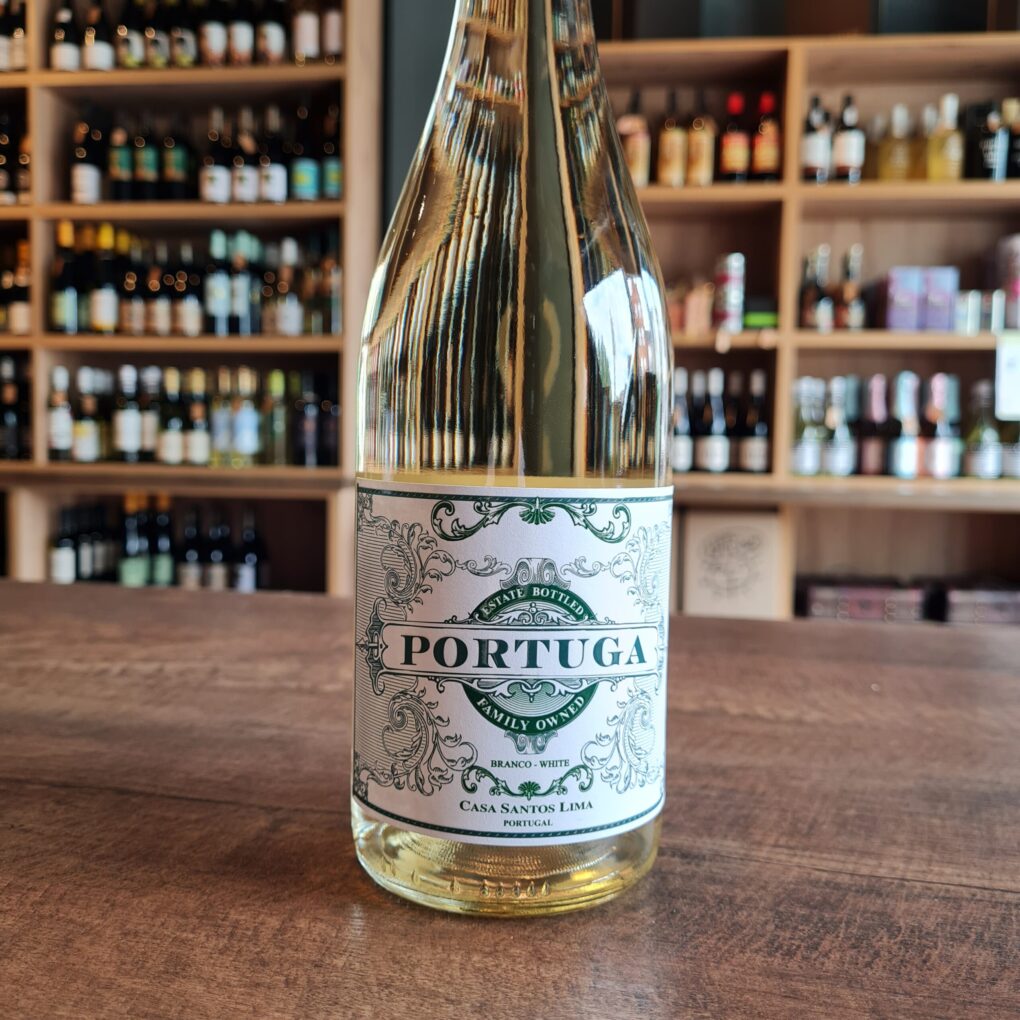
 These fresh and lovely whites were carefully chosen to make you travel through different parts of the world in comfort with a glass in hand. These are fresh, light, crispy, open wines that are super delicious and will test your taste buds and impress. Ferdinand Mayr Grüner Veltliner- Ferdinand Mayr is a musician turned winemaker and his organic wines are singing with flavour and intensity. Whoever says Grüner Veltliner says Austria and vice versa. This version of Ferdinand Mayr is accessible and it charms you right away. Exuberant, lively nose of citrus, apple and white pepper. On the palate, the ripe fruit and spiciness create a pleasant tension with the acidity. Crispy and ripe, as if you were biting into a juicy apple. Flavor and spiciness characterize this wine. Fantastic with Japanese or Thai cuisine. Portuga White Lisboa- A wine that presents itself as modern, with excellent aromatic intensity and offering citric fruit notes. With a light body, it has also a great natural freshness and shows great balance in the aftertaste.Delibori Pinot Grigio Lake Garda- Italian Pinot Grigio through and through with no surprises. This wine shows apple and pear with hints of white peach and elderflower. Light and refreshing, a mouth-watering partner for salads and seafood. Great any day of the week. Les Chaises Sauvignon Blanc- Another one that won't disappoint. This is a Languedoc Roussillon white made for the locals in South West France. Delicious, fresh zesty lemon and green apple flavours, lively and refreshing with good length. Ideal as an aperitif, with seafood, white meats, goats cheese and salads. Marlborough Sun Sauvignon Blanc- This absolutely stunning New Zealand white is what you expect from a sauvignon blanc from Marlborough and more. The inspiration for the labels came from a newspaper article about an unusual phenomenon that has swept the region... Pioneri Mundi Albariño- If you are a fan of Spanish Albariños, this one just ticks the box. Fantastic, all rounder and easy to drink, perfect for any occasion. Compliments all sorts of food, especially Tapas.
Portuga White Lisboa
-
 Founded in 1955, this co-operative is comprised of 200 members with 550 hectares of vineyards around Nizza Monferrato. This is an excellent area for Barbera, which constitutes over 60% of the grapes that are harvested and crushed by this co-op. In Alba, the best sites are given to Nebbiolo, but in Asti this privilege is afforded to Barbera.Director and winemaker Giovanni Chiarle oversees all aspects of production and is determined to make wines that fully express the quality of the grapes that he harvests. This wine is made from grapes from the oldest vines grown on the co-op’s best sites. After fermentation, the wine is aged for a period of around six months in large Slavonian oak and then blended to make a wine that is vibrant and, at the same time, structured and long, a worthy example of a Barbera Superiore from Nizza. Delicious with pizza, grilled lamb cutlets or pasta with meaty sauces. Also perfect with strong hard cheeses.
 -

 This wine clearly focuses on one grape variety, Pinot Noir. Only flawless grapes were harvested for this wonderfully balanced varietal wine by Martin Waßmer. The grapes grow under optimal conditions in Baden. The vines dig their roots deep into soils made of clay, limestone and loess. The Schlatter Maltesergarten Pinot Noir is clearly also determined by climatic and stylistic factors Schlatt (DE). This German wine can be described in the best sense of the word as a wine of the Old World, and it is extraordinarily impressive. The ripening of the harvest for this Pinot Noir wine is influenced to a large extent by the climate of the growing region. In Baden the grapes thrive in a rather cool climate, which is reflected, among other things, in particularly long and even grapes and a rather moderate must weight. When the perfect physiological ripeness is ensured, the grapes for the Schlatter Maltesergarten Pinot Noir are harvested exclusively by hand. This wine is best enjoyed at a temperature of 15 - 18°C. It is perfect as an accompanying wine to baked feta cheese parcels, lemon chili chicken with bulgur or red onions stuffed with couscous.